
So, you're thinking about getting a home barrel or maybe you already have one and you're wondering whether you've got the right size, or whether the oak is doing what you need it to do. This guide covers both questions in plain terms: what size suits your situation, and why the age and quality of the oak your barrel is made from makes the single biggest difference to what ends up in your glass.
The short version: barrel size is about how much wine you drink and how fast. Oak age and seasoning quality are about whether your barrel actually improves your fortified wine or fights against it.
PART 1 — SIZE
How to Choose Between 10L, 20L and 50L
Each barrel size suits a different kind of home winemaker. Here's how to think about it.
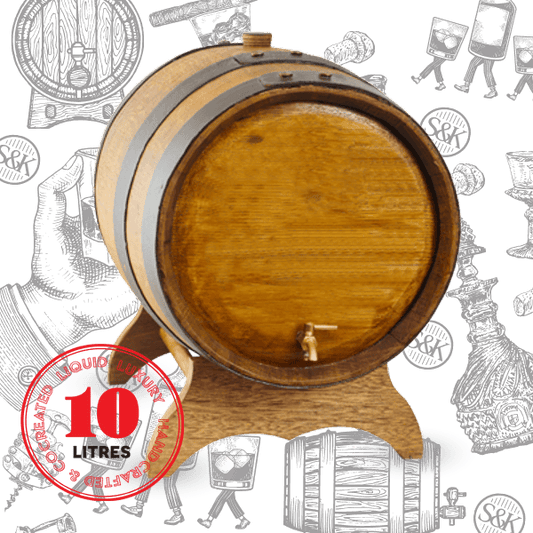
The 10 Litre Barrel — Perfect for the Curious Beginner
A 10L barrel holds roughly 13 bottles of wine. It's the ideal starting size if you're new to home barrels and want to get a feel for how the blending and ageing process works without committing to large volumes.
• Lower upfront investment — less wine needed to fill and maintain it
• Wood-to-wine ratio is higher, so the oak influence is more pronounced in the early months
• Easier to top up, taste, and adjust as you learn your preferred style
• Great as a gift or for someone who wants a barrel as a talking piece that also produces excellent fortified wine
The trade-off: a 10L barrel will need more frequent topping up than larger sizes, and because the surface-area-to-volume ratio is higher, the wine develops faster. This is a feature if you want to see results sooner but means you'll need to stay on top of maintenance.
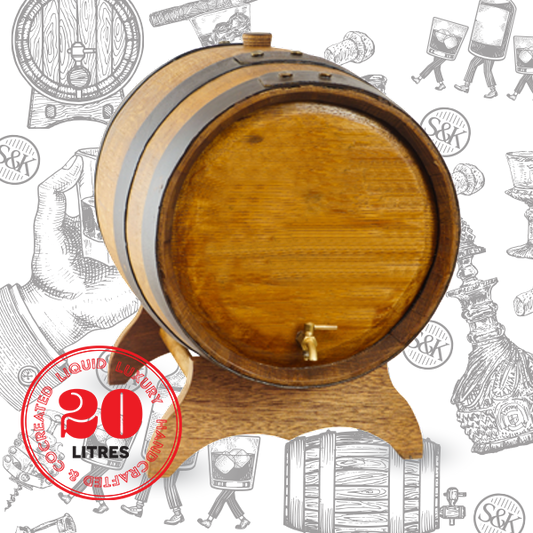
The 20 Litre Barrel — The Sweet Spot for Most Home Barrel Owners
A 20L barrel holds roughly 26 bottles. This is the most popular choice among Liquid Luxury members, and for good reason, it balances approachability with a more measured ageing curve.
• Slower development than a 10L, giving you more time between tastings and adjustments
• Lower topping-up frequency, less evaporation relative to volume
• Enough volume to blend more confidently and experiment with different fortified wine styles
• Suits someone who drinks a bottle of fortified wine every couple of weeks with friends
Most people who start with a 10L eventually move to a 20L as their confidence grows. If you're already comfortable with barrel care basics, start here.
The 50 Litre Barrel — For the Serious Collector and Enthusiast
A 50L barrel is a serious commitment, roughly 66 bottles. It's for someone who is genuinely passionate about the craft, wants to age a significant volume of fortified wine over many years, and has the patience and space for it.
• The slowest ageing curve of the three sizes: wine develops gradually and with great complexity over time
• Much lower topping-up frequency: evaporation is minimal relative to total volume
• Excellent for Liquid Luxury Wine Show entrants looking to build a truly aged, complex entry
• Often used by people who have had a 10L or 20L barrel for several years and want to step up
|
Quick reference: which size suits you? Drink a bottle of fortified wine per month or less → 10L. Drink one every couple of weeks, or entertaining regularly → 20L. Serious enthusiast, multiple years of experience, space and patience → 50L. |
PART 2 — OAK QUALITY
Why the Oak Your Barrel is Made From Matters More Than You Think
Here's something the cheap barrel sellers won't tell you: the quality, age, and seasoning of the oak your barrel is made from will have more impact on your fortified wine than almost any other variable. Get it wrong and no amount of good wine, careful blending, or patient ageing will save the final result.
What Happens When You Put Wine in a Young, Unseasoned Oak Barrel
A brand-new or poorly seasoned barrel made from young timber will actively extract harsh, astringent tannins and bitter compounds into your wine. These aren't the complex, integrated tannins you find in a beautifully aged fortified, they're raw, green, and aggressive. The wine can taste like you're chewing a plank.
Young oak also tends to be high in compounds called lactones and aldehydes that, in excess, produce overwhelming vanilla and coconut notes that mask the natural character of your Muscat, Topaque, or Tawny blend. It drowns the wine rather than enhancing it.
The problem doesn't go away quickly either. A barrel made from poorly seasoned young timber can take years of seasoning wine to come into balance, by which point you've either wasted significant product or given up on barrel ownership altogether.
What Properly Aged Oak Does Instead
Oak that has been allowed to air-dry and season over many years, ideally a decade or more, has had time for the harsh compounds to break down naturally. The wood becomes more porous and consistent. When wine enters the barrel, it interacts with the oak in a far gentler, more integrated way. You get the things you actually want:
• Gradual, complex tannin integration that adds structure without bitterness
• Natural oxidation through the staves that deepens colour and concentrates flavour
• A neutral, balanced wood character that allows your fortified wine to express itself
• Consistency, the barrel behaves predictably across the years
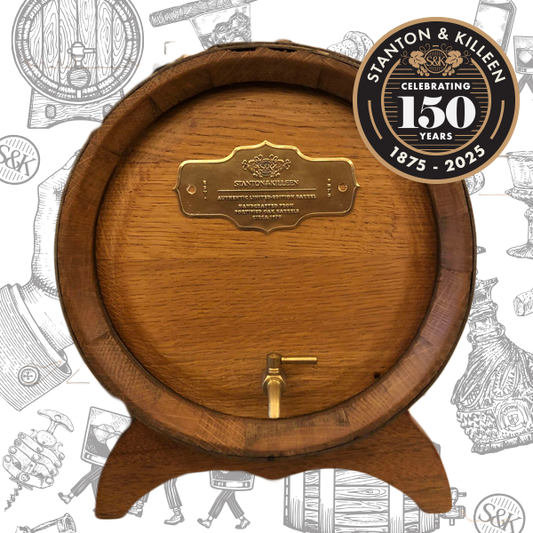
Our Barrels — Minimum 10-Year-Old Oak, Seasoned for 3–6 Months
Every barrel in the Liquid Luxury range is made from French or American oak that is a minimum of 10 years old. Before it ever sees wine, each barrel goes through a 3-to-6-month seasoning process using a neutral liquid that begins drawing out any remaining harsh compounds and prepares the wood for its role as an ageing vessel.
This is why our barrels behave differently from the moment you fill them. The wine you put in works with the barrel, not against it. You'll notice it in the first tasting that the integration is already underway.
|
The 50-Year-Old Oak Barrels For serious collectors and enthusiasts who want the ultimate vessel for a long-term aged fortified, we also have a limited number of barrels made from 50-year-old oak. These barrels are extraordinarily stable, have minimal oak extraction relative to their volume, and create a perfect environment for a fortified wine to develop slowly over many years. These are rare, if you're interested, contact us directly as availability is strictly limited. |
A Note on Cheap Barrels from Online Marketplaces
If you've seen barrels sold cheaply online, generic decorative barrels, imported flat-pack cooperage, or barrels with no stated oak age or seasoning history, approach them with real caution. These are overwhelmingly made from young, kiln-dried timber that has not been properly air-seasoned. They may look the part, but the interaction with your wine will often be harsh, unpredictable, and disappointing.
We're not saying every cheap barrel is bad, we're saying you have no way of knowing, and with home barrel fortified wine, the barrel is half the product. It's worth doing once, doing right.
HOW WE CAN HELP
Not Sure What's Right for You? Book a Barrel Check-in
If you already own a barrel and you're not sure whether the oak is performing well, or if you want personalised advice before buying, our Winemaker Barrel Check-in is designed for exactly this situation.
Bring 250ml of your current blend to the cellar door. Sit down with one of our winemakers for a one-hour session. We'll analyse your sample, walk through the results with you, and put together a practical plan to get your blend where you want it to go.
|
Barrel Check-in & Winemaker Consultation $80 per session · One hour · Limited to 3 sessions per week · Bookings essential Book here or call us directly. |