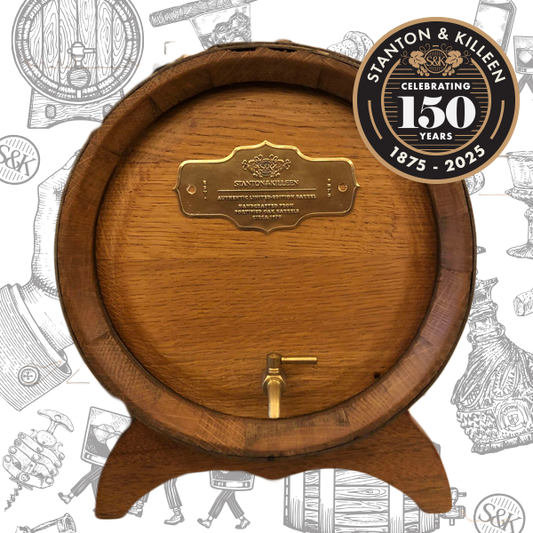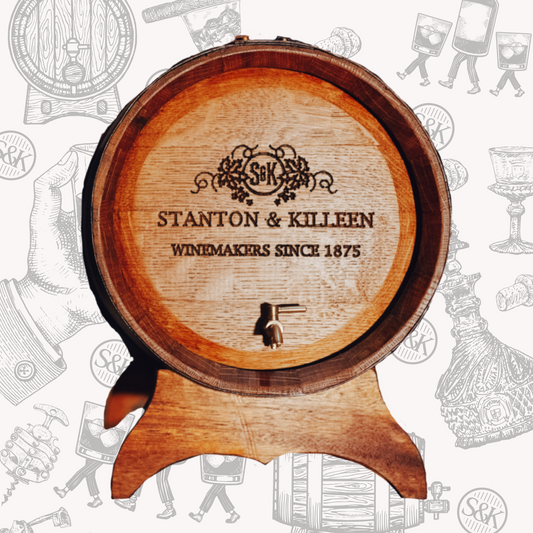

Every so often, a single vintage or a single parcel of Muscat is simply exceptional. The fruit was perfect; the season was kind and the wine that came out of a particular block that year has something distinctive enough that blending it away would be a genuine loss. When that happens, we keep it on its own and let it speak for itself.
But those wines are the exception. The overwhelming majority of great fortified wine, including everything in the Rutherglen classification system, is a blend. Understanding why tells you something important about what actually makes a Muscat exceptional.
What makes a vintage or block good enough to stand alone
Not every parcel of Muscat is destined to become part of a blend. Occasionally a specific vintage or a specific vintage from a specific block, shows something so distinctive, so complete in itself, that blending it into a larger parcel would dilute exactly what makes it special.
Our 2019 and 2021 Jack's Block Muscat releases are a single vintage and single vineyard expression. Sourced entirely from our Jack's Block vineyard, planted in 1921, the fruit from this block produces something unlike anything else on the estate. Over a century of vine age, combined with the specific character of that piece of ground, gives it a distinctiveness that would be lost if it were blended into a larger parcel. These wines are floral and highly distinctive precisely because they haven't been blended with anything else. What you taste is one moment in time from one specific, irreplaceable piece of land.
Our 2006 Solera Reserve Muscat is a different kind of single vintage. It's a single year, but not a single block, drawn from across the estate rather than one specific vineyard. What makes it stand alone is the vintage itself rather than the site, aged for two decades to develop the coffee, cocoa and burnt toffee complexity that defines it.
Why single vintages are genuinely difficult to keep
Keeping a single vintage sounds simple in theory, but holding one in barrel for years without blending is a genuinely risky exercise and it's worth understanding why these releases are rare.
A barrel of any fortified wine loses roughly 5% of its volume every year to evaporation, the angel's share. In a blended barrel this is easily managed. You top up with more material of a similar age and style, and the blend continues developing in a controlled, predictable direction.
A single vintage barrel doesn't have that luxury. You can't top it up with anything else without it stopping being a single vintage. So as that 5% evaporates every year with nothing replacing it, the remaining wine becomes more concentrated, the alcohol climbs, and the balance of the wine shifts further and further from where it started. Left too long, a single vintage can tip past its best point and become disjointed, all concentration and heat with none of the freshness that made it special in the first place.
This is why timing the release of a single vintage is as much a part of the winemaking as anything else. Our winemaker has to judge exactly the right moment, late enough that the wine has developed real character and complexity, but before the ongoing evaporation pushes it out of balance entirely. Get it right and you have something like Jack's Block Muscat. Get the timing wrong and years of patience are lost.
It's part of why single vintage releases like this are limited by nature rather than by marketing. Once a parcel is bottled at its peak, that's it. There's no barrel quietly waiting to be topped up and refreshed for next year. The 2019 Jack's Block Muscat is a perfect example, once this parcel sells through, it is gone permanently. The 2021 vintage from the same block will be the only Jack's Block Muscat available from that point on, and it will have its own distinct character shaped by that particular year.
Why blending is the foundation of great fortified wine
At Stanton & Killeen, our core Muscat range is built on a modified solera system, a traditional method of maturing and blending wine of different ages together to build a consistent house style over time. When we talk about a Classic Muscat with an average age of 12 years, that doesn't mean every drop in the bottle is exactly 12 years old. It means the blend as a whole averages out to that age, built from material spanning many different vintages, each contributing something different.
Young Muscat brings freshness, vibrant fruit and lifted florals. It's bright and immediate, but on its own it can lack depth. Older Muscat brings concentration, complexity, dried fruit and the rancio character that only comes from years of oxidative barrel ageing. On its own, very old Muscat can be intense to the point of being one-dimensional, all depth and no lift.
Blend the two together in the right proportions and something happens that neither component achieves alone. The freshness of the young material lifts and brightens the concentration of the old. The depth of the old material gives the young fruit somewhere to sit rather than floating on its own. The result has layers. It has movement across the palate. It has a beginning, a middle and a long finish, rather than one flavour that arrives and then stops.
This is the real argument for blending: complexity is not simply a function of age. It's a function of contrast. A wine built from many different ages and characters has more dimensions than a wine built from one, no matter how good that one wine is.
What this means for your home barrel
This is exactly the principle behind good barrel topping decisions and it's why we talk about bench trials so often.
If your barrel is entirely young material, it will taste fresh and floral but may lack the depth and complexity you're chasing. If your barrel is entirely very old material, it may taste intensely concentrated but can become slightly flat or one-dimensional over time without any lift to contrast against it.
The barrels that develop the most interesting, most layered character over the years are usually the ones where the owner has been thoughtful about introducing contrast. A splash of something young to lift the aromatics. A small addition of something genuinely old to deepen the complexity. Not in equal measure necessarily, but with intention, the way a winemaker builds a blend.
This is where our Specialty Blends earn their place. A Club Classic or Winemakers Reserve addition brings real age and complexity in a smaller, more intentional dose than simply topping up with more Standard material. It's the same principle behind a solera blend, applied at a barrel scale.
Related: How to choose the right topping wine for your barrel
Related: How to do a bench trial at home
The takeaway
Most great fortified wine is a blend and that's not a compromise; it's the whole point. Complexity comes from contrast, and contrast comes from combining material of different ages and characters with intention. A single vintage can be extraordinary when the wine itself earns that distinction and the timing of its release is judged perfectly, but for the vast majority of Muscat, Topaque and Tawny, including everything in your home barrel, blending is where the magic actually happens.
The next time you're deciding what to top up with, think less about matching age exactly and more about what your barrel needs to add a dimension it's currently missing. That's how a good blend, whether at the winery or in your own barrel, becomes a great one.
Related: Why is my barrel losing wine? The angel's share explained