
Do you think your blend has what it takes to impress some of the most respected fortified wine makers in the country?
Entries for the 2026 Liquid Luxury Amateur Fortified Wine Show are open right now and we want your blend on the judging table.
Five years of the show
When we launched the Liquid Luxury Wine Show in 2022 we had no idea how far it would come. What started as a small community tasting has grown into one of the most anticipated events on the Rutherglen wine calendar, with entries arriving from barrel owners all over Australia and a standard of winemaking that genuinely impresses our judges every single year.
This is the fifth year of the show. The quality keeps getting better. The question is whether your barrel is ready.
Important dates
Entries open: Monday 27 July 2026
Entries close: Wednesday 20 August 2026
Winners announced: Tuesday 15 September 2026
Entry fees
1 to 4 entries — $25
5 to 6 entries — $35
6 or more entries — $40
The categories and classes
There are four categories this year, each divided into three classes. Choosing the right category and class is one of the most important decisions you'll make as an entrant. Judge your wine on its flavour profile and character, not just its age. A young wine with exceptional freshness belongs in Class 1 even if it has been in the barrel for several years. A wine with deep aged complexity belongs in Class 3 regardless of how long you've owned the barrel.
Category 1: Muscat
Class 1: Young, Fresh and Fruity
Class 2: Complex, Rich and Luscious
Class 3: Dark, Decadent and Aged
Category 2: Topaque
Class 1: Young, Fresh and Fruity
Class 2: Complex, Rich and Luscious
Class 3: Dark, Decadent and Aged
Category 3: Ruby and Tawny
Class 1: Young, Fresh and Fruity
Class 2: Complex, Rich and Luscious
Class 3: Dark, Decadent and Aged
Category 4: Rebel Blend (Other varieties and mixed blends)
Class 1: Young, Fresh and Fruity
Class 2: Complex, Rich and Luscious
Class 3: Dark, Decadent and Aged
If you're unsure which category or class fits your wine, get a second opinion. Ask someone else to taste it and describe what they find. And don't hesitate to reach out to us — we're happy to help you find the right home for your blend.
What the judges are looking for
Our panel of industry experts tastes every entry blind and assesses each wine against the same criteria. Here's what they're actually looking for:
Freshness. A wine that is alive and vibrant rather than flat or tired. This is the first thing judges notice and often the deciding factor between a silver and a gold.
Category placement. Does the wine actually belong in the class it's entered in? A wine that clearly sits in the wrong class will be marked down regardless of its other qualities. Taste your wine honestly and enter it where it fits.
Aroma. The nose of a fortified wine tells you almost everything. Judges are looking for complexity, cleanliness and character on the aroma before the wine even reaches the palate.
Flavour and balance. A well-balanced wine has harmonious flavours without any single element overpowering the others. The sweetness, the spirit warmth, the fruit and the oak should all be working together rather than competing.
Complexity. The best entries show layers of flavour and aroma that evolve on the palate rather than delivering one note and stopping there. This is what separates good blends from great ones.
Overall impression and finish. A long, satisfying finish is a hallmark of a well-made fortified wine. Judges taste a lot of wines on show day. The ones they remember are the ones that linger.
How to prepare your best sample
This is where many entries either win or lose before they've even been tasted. Here's how to give your wine the best possible chance.
Start now, not on 19 August.
If you haven't topped up your barrel recently, do it now. If you need to add SO2, add it now. The reason is simple: wine needs time to integrate after any addition. Topping up or sulphuring in the week before the deadline means your wine will still be adjusting when the judges taste it. The aromatics can be closed off, the balance unsettled. Ideally you want at least one month, preferably two to three, between any additions and drawing down your sample.
SO2 check — at least one week before drawing down.
If you need to add sulphur, do it a minimum of one week before you pull your sample. Two to three weeks is better. Freshly added SO2 can give the wine a temporary struck-match character that will fade with time but will not impress a judge if it's still present in the sample.
Related: What is SO2 and does your home barrel actually need it?
Taste your wine honestly.
Pull a small sample with your wine thief and taste it critically. Is it the best it's been? Is it showing freshness and character? Does it belong in the category and class you're planning to enter? If you have any doubt about freshness or balance, address it now rather than hoping the judges won't notice.
Choose the right bottle.
Your sample needs to be in a clean 200ml bottle. Not a recycled jar. Not a bottle that previously held something else unless it has been exceptionally well cleaned and rinsed. Any residual aroma or flavour from a previous contents will taint your sample and your result. A new, clean bottle is always the right choice.
Label it clearly.
Every entry must be clearly labelled with:
- Your name
- The category you are entering (Muscat, Topaque, Ruby and Tawny, or Rebel Blend)
- The class you are entering (Young Fresh and Fruity, Complex Rich and Luscious, or Dark Decadent and Aged)
- Your entry confirmation number from the online form
IMPORTANT: Do not send your entry without completing the online form first. We need to know to expect it, and your entry confirmation number is how we match your sample to your entry on show day.
Pack it properly.
Wrap your entry like it is something precious — because it is. Glass wrapped in bubble wrap, sealed in a zip-lock bag in case of leakage, then packed firmly in a box with no room to move. We receive entries from all over Australia and a bottle that arrives cracked or leaking cannot be judged. Use express post to make sure it arrives before 20 August — we cannot accept late entries regardless of postage delays.
Post to: LiqLux Wine Show, PO Box 15, Rutherglen, Victoria, 3685
Want a full analysis as well?
Due to the volume of entries our judges provide constructive feedback and recommendations rather than a full technical analysis for every wine. If you would like a full SO2, alcohol and technical analysis run on your sample, include an additional 150ml sample in a separate clearly labelled container marked "sample for analysis." We will process these alongside the show entries. You will also need to write the size of the barrel and the current volume on the bottle, otherwise we can't provide accurate results.
The prizes
Every gold medal and trophy winner receives a medallion to go straight on your barrel — the ultimate bragging right in any barrel room.
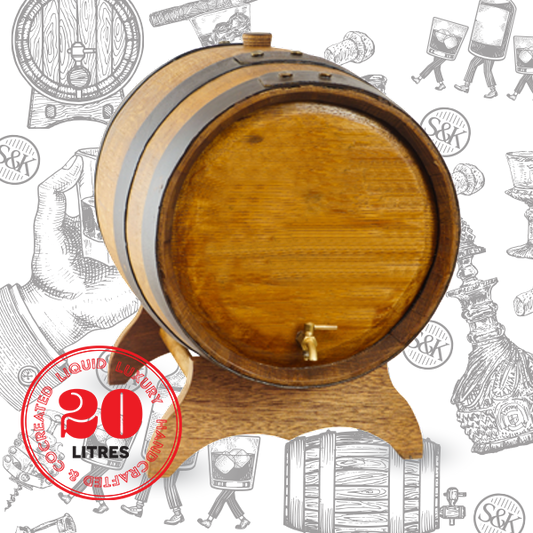
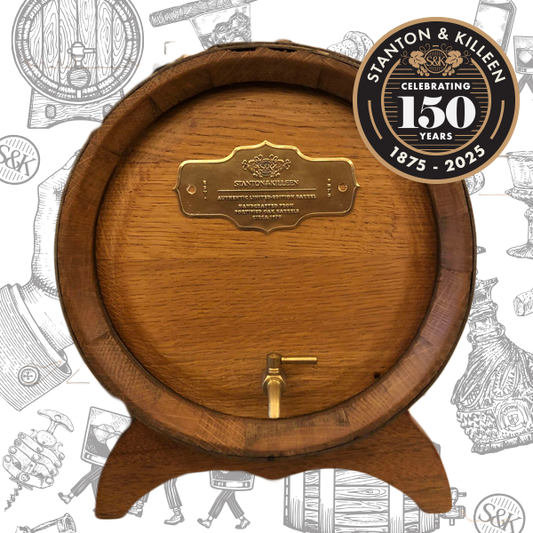
2026 Best in Show Trophy: 1 x 10 litre barrel made from 50-year-old oak.
This is the one everyone is after. Five years of winners. One barrel that will outlast all of us.
Ready to enter?
Head to the online entry form, complete your details and pay your entry fee. Once confirmed you'll receive your entry number to include on your label.
We opened early this year because we wanted to give our barrel owners as much time as possible to taste, refine and prepare. The entrants who take their time and send a wine that is genuinely ready always outperform the ones who rush. You have until 20 August. Use the time well.
We can't wait to taste what you've been building.
Related: What is SO2 and does your home barrel actually need it?
Related: How to do a bench trial at home
Related: What to do if you haven't topped up your barrel in months
Related: Why barrel wine tastes flat or dull and how to fix it