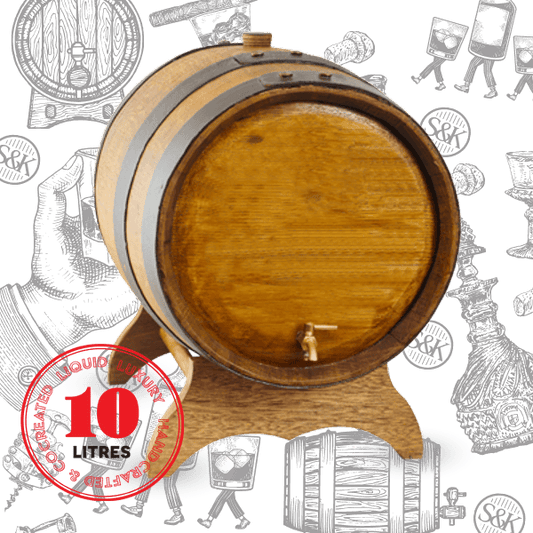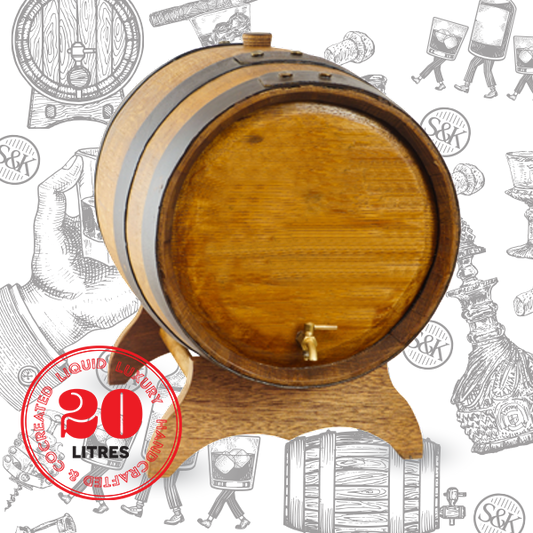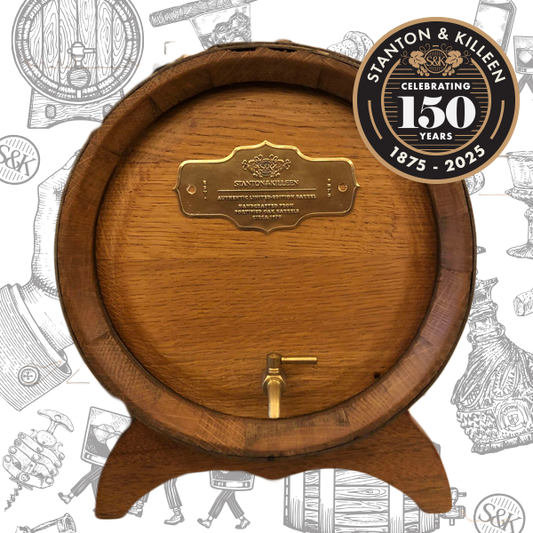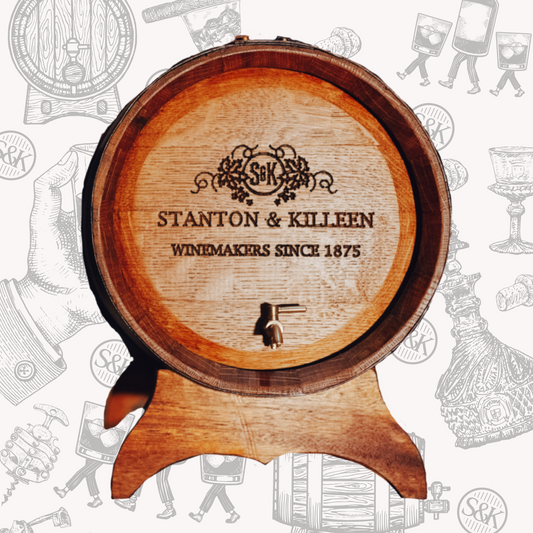

If you've visited a Rutherglen cellar door or browsed the Liquid Luxury barrel range, you've encountered both names. Muscat and Topaque sit side by side on every shelf and tasting list in the region. They're both sweet, both fortified, both made in small quantities by families who've been doing it for generations. And to a newcomer, they can look almost identical in the glass.
They are not the same wine. Here's how to tell them apart.
Where they come from
Both Muscat and Topaque are made in Rutherglen using the same basic method — the grape juice is fortified with grape spirit during fermentation, which stops the fermentation early and preserves the natural sugars. The wine is then aged in oak barrels, often for many years, developing the concentration, colour and complexity that makes Rutherglen fortified wine unlike anything else in the world.
The difference starts with the grape.
Muscat is made from Brown Muscat, a dark-skinned variety also known as Muscat Blanc à Petits Grains. It's one of the oldest and most widely planted grape varieties in the world, and in Rutherglen it produces a wine of extraordinary richness and aromatic power.
Topaque is made from Muscadelle — a completely different grape, despite the similar-sounding name. It's a white variety, and despite being sometimes confused with Muscat, it is not related to it at all. Topaque was known as Tokay until 2010, when Australian producers renamed it to avoid confusion with Hungary's Tokaji wines. The name Topaque refers to the wine's characteristically opaque appearance.
How they taste
This is where the two styles genuinely diverge, and where most people find their preference.
Muscat is the richer, more generous of the two. Think raisins, Christmas pudding, rose petal, dark toffee, dried fig and orange blossom. It's sweet, concentrated and deeply aromatic — a wine that announces itself from the moment you pour it. At the Classic level it has real freshness and fruit vibrancy. At Grand and Rare, it becomes something almost impossibly layered, with decades of slow barrel ageing turning it into one of the most complex wines made anywhere in the world.
Topaque is finer and more elegant. The flavours are lighter — cold tea, honey, butterscotch, citrus peel, malt and caramelised nuts. It's still sweet and still rich, but where Muscat can feel like a meal in itself, Topaque has a kind of refinement that makes it feel almost delicate by comparison. Many experienced tasters find Topaque the more intellectually interesting of the two, precisely because its subtlety rewards attention.
At their best, there are times when Muscat and Topaque can be a little difficult to tell apart — particularly in the older, more aged expressions where both wines converge on a similar intensity and concentration. But at the Classic level, the difference is clear and immediate.
The colour difference
Pour them side by side and the difference is visible before you taste anything. Muscat is darker, leaning toward deep amber or mahogany even at a younger age. Topaque tends toward a brighter, more golden amber. Both deepen and darken significantly with age — older expressions of both styles can appear almost black in the glass.
Which one is right for your barrel?
This is the question most home barrel owners start with, and the honest answer is that it comes down to personal taste more than any objective quality difference.
Choose Muscat if you love richness, sweetness and aromatics you can smell from across the room. It's the more forgiving style in a home barrel — its generous fruit character develops beautifully over time and it's harder to go wrong with. It's also the style most people associate with Rutherglen, which makes it a natural starting point.
Choose Topaque if you prefer something finer, more savoury and less overtly sweet. Topaque rewards patience in a barrel and can develop a remarkable elegance with age that many experienced barrel owners find more interesting to work with than Muscat's more straightforward generosity. Its lighter character also makes it more versatile at the table — it works beautifully chilled as an aperitif as well as after dinner.
Can't decide? You're not alone. Some barrel owners run one of each — a Muscat barrel and a Topaque barrel — and blend between them at tasting time. A small amount of Topaque can add lift and elegance to a Muscat-heavy blend, and vice versa.
The classification system applies to both
Both Muscat and Topaque use the same four-tier classification system: Rutherglen, Classic, Grand and Rare. The tiers reflect average age and complexity rather than a strict vintage, and both styles become progressively richer, darker and more intense as you move up through the classifications.
At the Rutherglen tier (3 to 5 years average age) both styles are fresh and approachable. At Rare (20 years or more) both are extraordinary — among the most complex wines made anywhere in the world. The topping wines available through Liquid Luxury span the Classic level and above, giving home barrel owners access to genuine aged material rather than young base wine.
The short version
Muscat: richer, sweeter, more aromatic. Christmas pudding, raisins, rose petal.
Topaque: finer, more elegant, more savoury. Cold tea, butterscotch, citrus, malt.
Both are made in Rutherglen by the same method from the same families. Both age beautifully in a home barrel. The one you choose says something about the kind of wine drinker you are — and the only way to know which camp you're in is to try them side by side.
Shop Classic Muscat and Classic Topaque at liquidlux.com.au
Related: Tawny vs Vintage Fortified - what's the difference?
Related: Muscat Vs Tawny - what's the difference and which should you choose?
Related: How to choose the right topping wine for your barrel