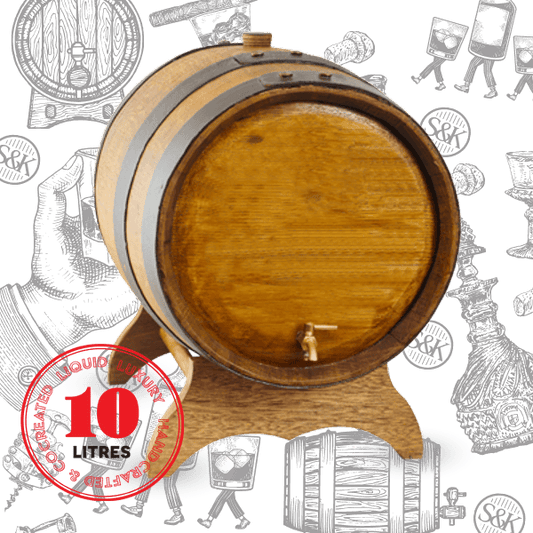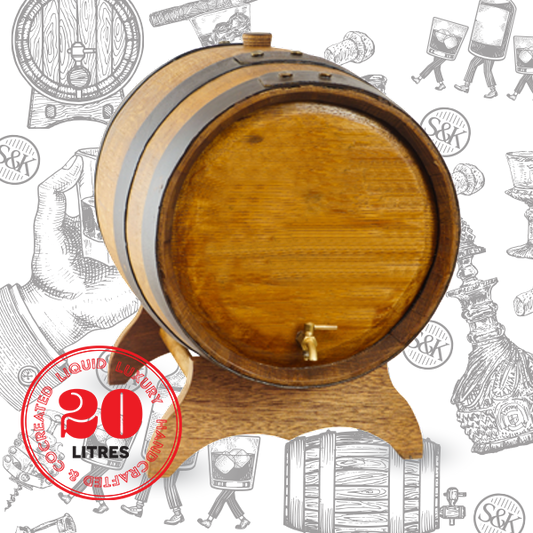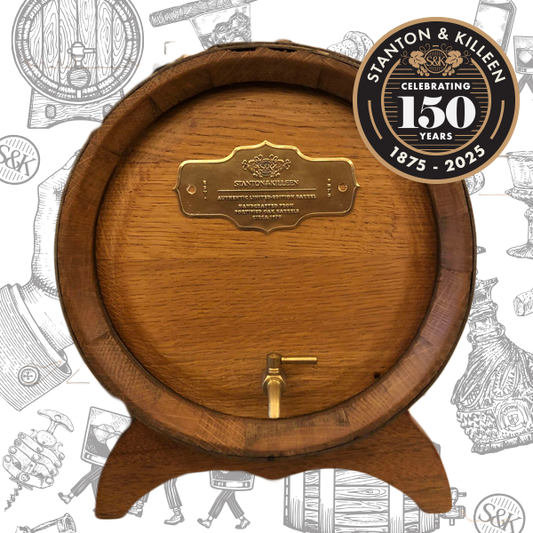

Your barrel is not a static container. It is not a bottle, not a tank, not an inert vessel that simply holds your wine while time passes. It is a living thing, or at least, it behaves like one. It breathes. It moves with the seasons. It responds to heat and cold in ways that directly affect the wine developing inside it.
Understanding what your barrel is doing right now, in winter, is one of the most useful things a home barrel owner can know. Because it turns out that cold weather is not something to worry about. It's something to welcome.
What "living vessel" actually means
Oak is a porous wood. At a microscopic level the staves of your barrel are full of tiny channels called vessel cells and ray cells that once carried water and nutrients through the living tree. The tree is long gone, but those channels remain, and they are what make oak such a remarkable material for ageing wine.
Through these pores, a slow and controlled exchange happens between the wine inside and the atmosphere outside. A small amount of oxygen enters the barrel. A small amount of water and alcohol vapour exits as evaporation: the 'angel's share'. The wine is never entirely sealed from the world. It is in constant, quiet conversation with its environment.
That conversation changes with the seasons.
What happens to your barrel in winter
As temperatures drop, the oak contracts. The wood fibres tighten slightly as the cold slows molecular movement throughout the staves. This has a direct effect on what's happening inside your barrel:
The rate of oxygen exchange slows. Contracted wood means the micro-oxygenation that drives the ageing process becomes gentler and more measured. The wine is exposed to less oxygen per day in winter than in summer. The result is a slower, more controlled period of development.
Evaporation drops significantly. The angel's share slows in cold weather. The wine you worked hard to fill your barrel with is being preserved rather than consumed. A barrel that might lose 10 to 15% of its volume over a hot Rutherglen summer may lose only a fraction of that across the winter months.
The wine settles. Lower temperatures help clarify the wine naturally. Proteins and tannins that remain in suspension in warmer conditions slowly precipitate and settle during winter. This is part of why wine drawn from a barrel in late winter or early spring often shows more clarity and elegance than the same wine tasted in the middle of summer. And why we call for Liquid Luxury wine show entries in the middle of winter!
Flavour integration happens quietly. The warmth of summer can make a barrel wine feel slightly aggressive — the alcohol a little sharp, the barrel character a little assertive. Winter softens all of that. The wine integrates. Components that were separate begin to find each other. Many experienced barrel owners find their best tasting sessions happen on a cold evening in July or August, when the wine is showing a quiet complexity, it didn't have six months earlier.
How cold does it actually get here?
Rutherglen winters are proper winters. The Stanton & Killeen cellar sits in the middle of a climate that regularly drops to 2°C or below overnight from June through August, with frost on the ground some mornings and daytime temperatures that rarely get above 14 or 15°C for weeks at a time.
Our own barrels in the cellar experience those conditions. We don't temperature-regulate our barrel storage to some artificially stable environment. The cold comes in, the barrels contract, the wine slows down. And then spring arrives, the temperature climbs, the wood expands again, and the wine wakes up.
That seasonal rhythm: the contraction of winter, the expansion of spring and summer, the contraction again, is one of the reasons Rutherglen fortified wine develops the way it does. It is not despite the climate. It is because of it.
What barrel expansion and contraction mean practically
When temperatures rise in spring, the oak expands. Those micro-channels open up again. Evaporation accelerates. Oxygen exchange increases. The wine that was resting quietly through winter begins developing more actively again.
This is why spring is the most important time to check your barrel. The combination of rising temperatures, increasing evaporation, and more active oxygen exchange means your wine is about to enter its most dynamic period of the year. If your SO2 levels are low or your barrel is not properly topped up when spring arrives, you're entering that active period without the protection you need.
Winter gives you the breathing room to get your barrel right before that happens, our winter barrel care checklist is a good place to start if you haven't checked on yours in a while.
The contraction question — should you worry about leaks?
When a barrel contracts in cold weather, especially if it has been stored with some ullage or if it dried out at any point, the staves can shrink enough to create a small seam that weeps wine. This is more common with newer barrels or those that have spent time less than completely full.
The fix is straightforward: keep your barrel full. A barrel that is properly topped up to the bung hole will swell the staves from the inside and maintain a tight seal regardless of what the temperature does externally. The wine itself is your best tool against cold-weather weeping.
If you do notice a small seam leak when the weather turns cold, top up immediately and give it 24 to 48 hours. In most cases the staves will swell back and seal on their own and if they don't, our guide on how to fix a leaking barrel walks through what to check next.
Why winter is the season to taste carefully
Because the wine is in a slower, more integrated state, winter is actually one of the most informative times to taste your barrel. The aggressive edges that can make a summer tasting feel less revealing are softened. You can taste the structure more clearly such as the sweetness, the length, the complexity that's developing underneath.
Pull a small sample this winter. Taste it properly. Note what you find. The wine you're tasting in June or July is showing you what months of patient ageing actually looks like and it's often considerably better than barrel owners expect.
If you want to go a step further, send a sample for analysis. Winter is an excellent time to get a full picture of where your barrel stands before the active spring development period begins.
The short version
Your barrel is alive. It breathes, moves and responds to the world around it. Winter slows it down, tightens it up, and gives the wine inside a period of quiet integration that summer simply cannot replicate. The cold that settles over Rutherglen from June through August is not a threat to your barrel. It is part of what makes the wine in it worth waiting for.
Leave it alone. Keep it full. Check it once or twice across the season. And taste it on a cold evening. You might be even pleasantly surprised by what you find.
Questions about your barrel? Our winemaking team is available Monday to Friday at wine@stantonandkilleen.com.au or (02) 6032 9457. Barrel Club members can book a Barrel Check-in consultation here