
You fill your barrel, pop the bung back in, and check on it a month later. The level has dropped. Nothing is leaking. Nothing looks wrong. Where did the wine go?
The answer has a beautiful name: the angel's share. It's completely normal, it happens to every barrel in the world, and understanding it is one of the most useful things a home barrel owner can know.
What is the angel's share?
Oak is a porous material. As your fortified wine sits in the barrel, a small amount of water and alcohol vapour slowly passes through the staves and evaporates into the surrounding air. This is not a fault or a failure. It is the mechanism by which barrel ageing works. The slow exchange of oxygen through the wood is what transforms raw fortified wine into something layered, complex and deeply aged over time.
The wine that evaporates has been whimsically described as going to the angels, hence the name. It happens in every barrel cellar in the world, from the great wineries of Rutherglen to the shed at the back of your garden.
How much should my barrel be losing?
This varies based on several factors, but as a general guide for home barrels in Australian conditions:
5 litre barrel: can lose 0.5 to 1.5 litres per year, up to 30% of its volume in a warm shed.
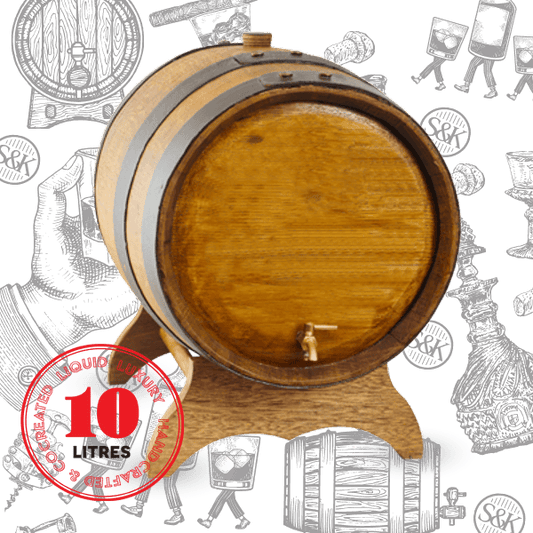
10 litre barrel: typically loses 0.5 to 1 litre per year.
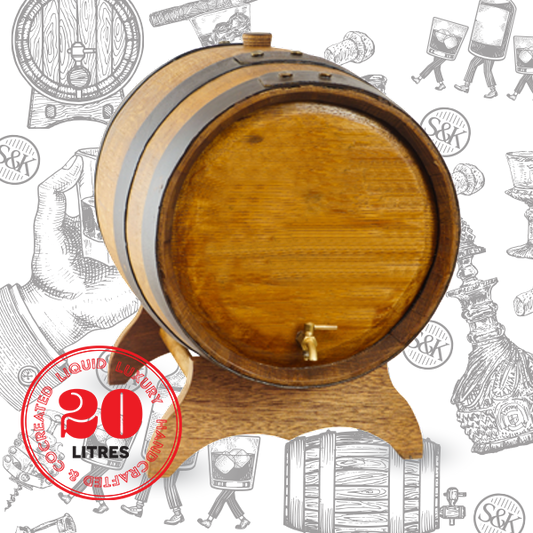
20 litre barrel: might lose 1 to 2 litres per year.
50 litre barrel: typically loses 2 to 3 litres per year under normal conditions.
If you're losing significantly more than these amounts and can't attribute it to a hot summer or very dry storage conditions, it's worth checking for a slow leak around the bung or between the staves. Our guide on how to fix a leaking barrel covers exactly what to look for.
What affects how quickly your barrel loses wine?
Temperature
This is the biggest factor. A barrel in a hot summer shed will lose wine much faster than one in a cool, stable environment. Here at Stanton & Killeen our winery sheds can hit over 40°C in the peak of summer and drop below minus 4°C in winter. Those extreme seasonal swings do two things: they accelerate evaporation in summer, and they drive a dynamic ageing process that adds genuine complexity and depth to the wine. The heat is not something we try to eliminate. It is part of what makes Rutherglen fortified wine develop the way it does. But it does mean your barrel will need topping up more often over summer.
Barrel size
Smaller barrels have a higher surface area relative to their volume, which means they lose a higher proportion of their wine to evaporation. A 5L barrel ages faster and loses proportionally more than a 50L barrel. This is one reason smaller barrels suit owners who want quicker development but require more active management and more frequent topping up.
Humidity
Dry conditions accelerate evaporation. More humid conditions slow it. A barrel in a dry, ventilated shed will lose wine faster than one in a cooler, more sheltered space. In very dry conditions it is also alcohol that evaporates more readily than water, which can slightly increase the concentration of your blend over time.
Age and seasoning of the barrel
Brand new oak is more porous than well-seasoned older oak. A barrel that has held wine for several years will typically lose less to evaporation than a brand new one in its first season. This is one of the reasons all Liquid Luxury barrels are made from minimum 10-year-old oak. Properly seasoned staves behave more predictably and give you better control over the ageing environment from the start.
When does evaporation become a problem?
Evaporation itself is not a problem. It is part of the process. The issue is when the level drops low enough to create significant ullage, the air gap between the surface of your wine and the bung hole.
A small amount of controlled oxygen exposure through the oak staves is beneficial and intentional. Significant ullage from a large air gap accelerates oxidation beyond what you want, and creates conditions where spoilage bacteria can develop.
The rule of thumb: top up before your barrel reaches three-quarter full. For smaller barrels in hot conditions this might mean topping up every four to six weeks over summer. For larger barrels in stable conditions every three to six months may be sufficient. If you haven't topped up in a while, our guide on what to do if you haven't topped up your barrel in months is a good place to start.
For a deeper look at managing ullage, see our guide: what is ullage and how much is too much in a home barrel?
How to track your barrel level
The simplest tool for tracking evaporation is a dipstick. Lower it into the barrel through the bung hole, mark the level, and record it each time you check. Over a few months you'll have a clear picture of how fast your barrel is losing wine and whether the rate is consistent with the season and conditions.
A dipstick also makes topping up more precise. You'll know exactly how much wine to add rather than eyeballing the bung hole. You can pick up a Liquid Luxury branded dipstick from our accessories range.
For more on what your barrel does through the seasons, read: your barrel is alive — what winter does to your oak and why it matters.
What to top up with
When you top up, you're not just replacing lost volume. You're making a blending decision. The wine you add will influence the character, age and direction of everything already in your barrel. Top up within your style, Muscat with Muscat, Topaque with Topaque, Tawny with Tawny, and think about the age of your topping wine relative to where your barrel is at.
Adding very young wine to a mature barrel can dilute the aged characters you've spent years building. Adding a Specialty Blend in a small amount can bring a meaningful lift in complexity to a barrel that's ready for it. Our full guide on how to choose the right topping wine for your barrel covers every style and tier in detail.
Frequently asked questions
My barrel level dropped a lot over summer. Is something wrong?
Almost certainly not. Summer evaporation in a warm Australian shed can be dramatic, particularly for smaller barrels. If nothing is visibly leaking and the level drops over summer and stabilises in cooler months, that's completely normal. Top up before it gets too low and keep an eye on it through the warmer months.
Does the alcohol or the water evaporate more?
Both evaporate, but in warm and relatively dry Australian conditions water tends to evaporate faster than alcohol, which means the alcohol percentage of your wine can increase slightly over time. In cooler, more humid conditions the reverse can happen. Annual sample analysis tracks these changes so you know exactly what's happening in your barrel.
Can I slow evaporation by storing the barrel somewhere cooler?
Yes. Cooler, more stable temperatures mean slower evaporation and slower overall ageing. Whether that's desirable depends on your goals. Many experienced barrel owners prefer a naturally warm environment because the seasonal variation builds complexity. At Stanton & Killeen our barrels sit in sheds that hit 40°C in summer and we consider that an advantage, not a problem.
What if my barrel is losing wine much faster than the estimates above?
Check carefully for a slow leak around the bung, tap or between the staves. A small drip can lose considerable volume over weeks without being immediately obvious. If you can't find a leak and the loss seems genuinely excessive, contact us. It could indicate a structural issue that needs attention.
How do I know when to top up?
Check your barrel level with a dipstick every four to six weeks in summer and every two to three months in winter. Top up before the level drops below three-quarter full. Don't wait until it looks significantly low. By that point you may already have more ullage than you want.
Do your angels need monitoring? A dipstick will help! You can purchase your very own Liquid Luxury branded dipstick here.
Questions about your barrel? Our winemaking team is available Monday to Friday at wine@stantonandkilleen.com.au or (02) 6032 9457. Barrel Club members can book a Barrel Check-in consultation.