

We get asked this more often than you might expect. Can I put red wine in my barrel? What about Vintage Fortified? Could I age some whisky in it? What if I add a splash of brandy to boost the alcohol?
The answer to all of these is no. And the reasons are worth understanding before you pour anything into your barrel, because some of these mistakes are difficult or impossible to reverse.
Here is why fortified wine is the only correct fill for a Liquid Luxury barrel, and what happens to your barrel and your wine when you use anything else.
Why your barrel is designed specifically for fortified wine
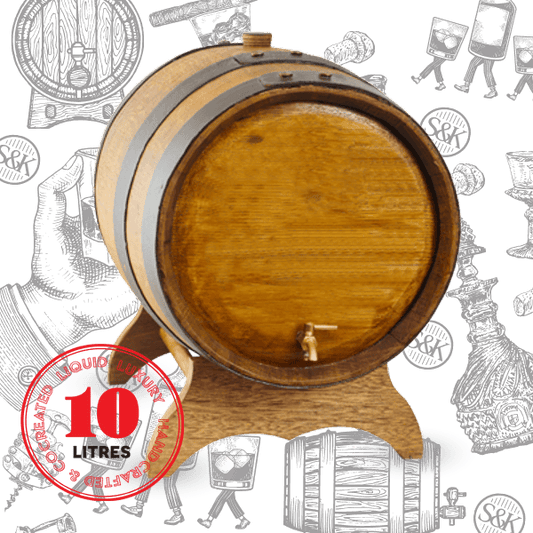
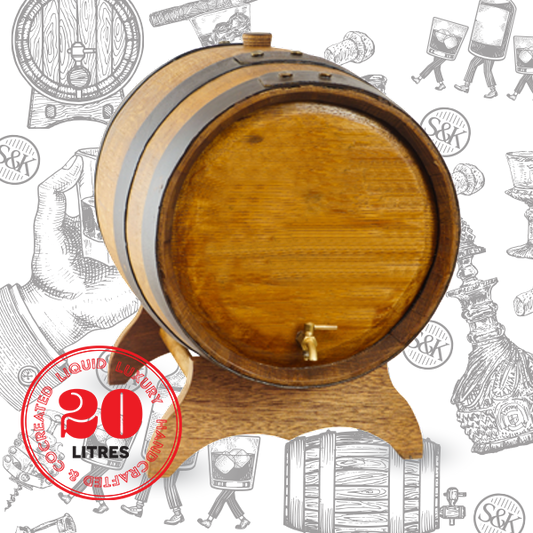
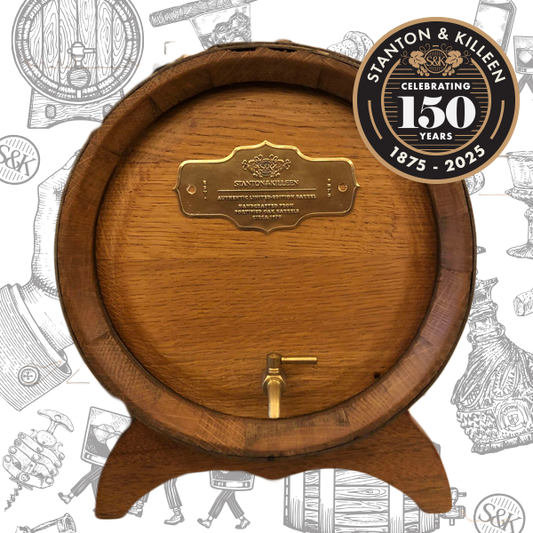
Every Liquid Luxury barrel is built from minimum 10-year-old oak that has already been seasoned and prepared for fortified wine. The wood has been chosen and crafted to support a specific kind of ageing process: the slow oxidative development of high-alcohol, high-sugar wine in a stable, controlled environment over many years.
The barrel is seasoned with fortified wine before it arrives with you. The oak is already impregnated with the residual sugars, colour and character of the wines that have lived in it. That history is part of what makes the barrel work. When you introduce anything other than fortified wine, you are not just adding a different liquid. You are introducing chemistry, microbiology and flavour compounds that the barrel was never designed to handle, and that can permanently alter or damage the wood.
Why you should never put red wine in your barrel
This is the most common question and the most tempting mistake. You have a bottle of Shiraz left over from dinner. The barrel needs topping up. Why not?
Because red wine and fortified wine are fundamentally different liquids that age in completely different ways, and a barrel that has held one is not easily converted to hold the other.
Red wine has an alcohol level of 13 to 15%, residual sugar close to zero, and an active biological environment. It is vulnerable to oxidation, volatile acidity and spoilage in ways that fortified wine, with its 17 to 20% alcohol and high residual sugar, is not. Introducing red wine into a barrel that is already holding fortified wine will immediately dilute the alcohol level of your blend. That reduced alcohol creates exactly the conditions where spoilage bacteria can take hold, where volatile acidity can develop, and where your carefully built blend can begin to deteriorate.
Beyond the chemistry, the flavour consequences are significant. Red wine in a fortified barrel introduces tannin, acidity and primary fruit characters that will fight against the rich, oxidative sweetness of your fortified blend rather than complement it. The result is a confused, unbalanced wine that is neither a good fortified nor a good red wine. It is something in between, and not in a good way.
Once red wine goes into your barrel, the only way forward is to draw everything off and start again. The wood itself will retain residual red wine character and tannin that will influence every future fill. This is not a recoverable situation.
Why you should never put Vintage Fortified in your barrel
This question comes from a logical place. Vintage Fortified is a fortified wine. It has high alcohol. It's made by Stanton & Killeen. Surely it would work?
It would not, and understanding why is one of the most important things a barrel owner can know about the two different styles of fortified wine.
Vintage Fortified, which is what the rest of the world calls Vintage Port, is a bottle-aged style. It is made from a single exceptional vintage, fortified to lock in primary fruit, and then bottled young so that it can develop slowly in the bottle over many years. The whole point of Vintage Fortified is that it does its best work in glass, not in wood. It develops reductively, away from oxygen, building the soft tannins and complex dried fruit characters that make a mature Vintage Fortified extraordinary.
Put it in your barrel and you are working directly against what the wine was made to do. The barrel will expose it to oxygen at exactly the rate that Vintage Fortified is designed to avoid. Rather than developing slowly and beautifully in the bottle, it will oxidise too quickly, lose its primary fruit character, and become something flat and characterless long before it should.
More practically, Vintage Fortified is also significantly more expensive than the topping wine range. Putting it in your barrel is not just the wrong move for the wine, it is an unnecessary expense for a result that will disappoint.
If you want Vintage Fortified in your collection, buy bottles and cellar them. If you want something to develop in your barrel, use Muscat, Topaque or Tawny material from the Liquid Luxury range.
Related: Tawny vs Vintage Fortified — what's the difference?
Why you should never put whisky, brandy or spirits in your barrel
This one circulates online and the advice is almost always wrong in the context of a Liquid Luxury barrel.
There is a category of small decorative barrel sold for the purpose of ageing spirits at home. Those barrels are designed specifically for spirits, made from different oak with different toasting profiles, and they work on a completely different principle to a fortified wine barrel.
A Liquid Luxury barrel has been seasoned with fortified wine and is impregnated with the sugar, colour and character of that wine. Put whisky or brandy in it and several things happen immediately. The spirit, which is clear or lightly coloured and entirely free of residual sugar, will draw the residual fortified wine out of the wood. What you will end up with is not aged spirit. You will end up with something that tastes like diluted, slightly confused fortified wine mixed with raw spirit, aged in a barrel that is now no longer suitable for fortified wine.
Adding a splash of brandy or grape spirit to your barrel to boost the alcohol is equally misguided. The fortified wine in your barrel already has the right alcohol level for its ageing environment. Adding raw spirit does not improve it. It introduces harsh, unintegrated alcohol that will take a very long time to soften, and in the meantime it pushes your blend out of balance in a way that is difficult to correct.
The grape spirit used to fortify wine at Stanton & Killeen is added at the winery during production, under controlled conditions, at the exact moment in fermentation when it will integrate properly with the wine. It is not something to replicate at home with a bottle of brandy.
What your barrel is actually designed for
Your barrel is designed to do one thing exceptionally well: age fortified wine slowly and patiently over many years, building complexity, depth and a character that you simply cannot replicate any other way.
That process works because the high alcohol and sugar of fortified wine creates a stable, protected environment inside the barrel. The controlled micro-oxygenation through the oak staves is calibrated for that alcohol level and that sugar content. The Muscat, Topaque and Tawny material in the Liquid Luxury topping wine range has been selected and priced to give you the right building blocks at every stage of your barrel's development, from the early years through to mature, complex blends that benefit from Specialty Blend additions.
The answer to what to put in your barrel is always fortified wine. Specifically Muscat, Topaque, Tawny or White Fortified from a source you trust, at an age that suits where your barrel currently is. Everything else is a shortcut that costs more than it saves.
Related: How to choose the right topping wine for your barrel
Related: How to choose the right home barrel and fortified wine
Related: What to do if you haven't topped up your barrel in months
Frequently asked questions
Can I use a Liquid Luxury barrel for whisky or spirits after I am done with fortified wine?
We would not recommend it. The barrel is deeply impregnated with fortified wine character and residual sugar. Any spirit aged in it will take on significant fortified wine flavour, which may or may not be what you want. If you are interested in ageing spirits at home, purpose-built spirit ageing barrels are available and are a much better choice.
What if I accidentally added a small amount of red wine when topping up?
A very small amount, say a splash mixed into a full barrel, is unlikely to cause catastrophic damage but it will affect your blend and potentially reduce the alcohol level slightly. Draw off a sample immediately, taste it, and contact us. We can advise on whether any corrective action is needed based on how much was added relative to the volume of your barrel.
Can I blend Muscat and Tawny in my barrel?
As a general rule we recommend staying within your style. Muscat with Muscat, Topaque with Topaque, Tawny with Tawny. Crossing styles can produce interesting results in small, carefully bench-trialled amounts, but we would always recommend running a bench trial in a glass before adding anything different to your barrel. A small amount of Topaque can add lift and elegance to a Muscat blend, but it should be a deliberate, tasted decision rather than a casual top-up choice.
What about White Fortified?
White Fortified from the Liquid Luxury range is perfectly appropriate for your barrel, particularly as a component in a Topaque-style blend. It shares the same Muscadelle base as Topaque and blends naturally across the Topaque range.
Can I add water to lower the alcohol if my blend is too strong?
No. Adding water to a fortified wine barrel creates exactly the conditions you are trying to avoid: lower alcohol, higher risk of spoilage, and a diluted blend that has lost the character you have spent time building. If your blend feels too spirit-forward, the right answer is to add an appropriately aged topping wine, not water. Contact us if you are unsure what to add.
Questions about your barrel? Our winemaking team is available Monday to Friday at wine@stantonandkilleen.com.au or (02) 6032 9457.

1 comment
Thank you for this very useful note on managing my port and muscat barrels. I have a 10l cask which is about 20 years old and a 10l muscat barrel which is probably 10 years old. Both are drinking very well and topped up at the end of most winters with Stanton and Killeen. I was surprised by the advice around not adding spirit as it must lose alcohol in the barrel – and there is a lot of contrary advice in the internet. While I have never added anything to the muscat, I feel the port has benefitted from the addition of a good quality brandy from time-to-time.